
DiasGrid: The Infrastructure Behind Diaspora Property Financing.
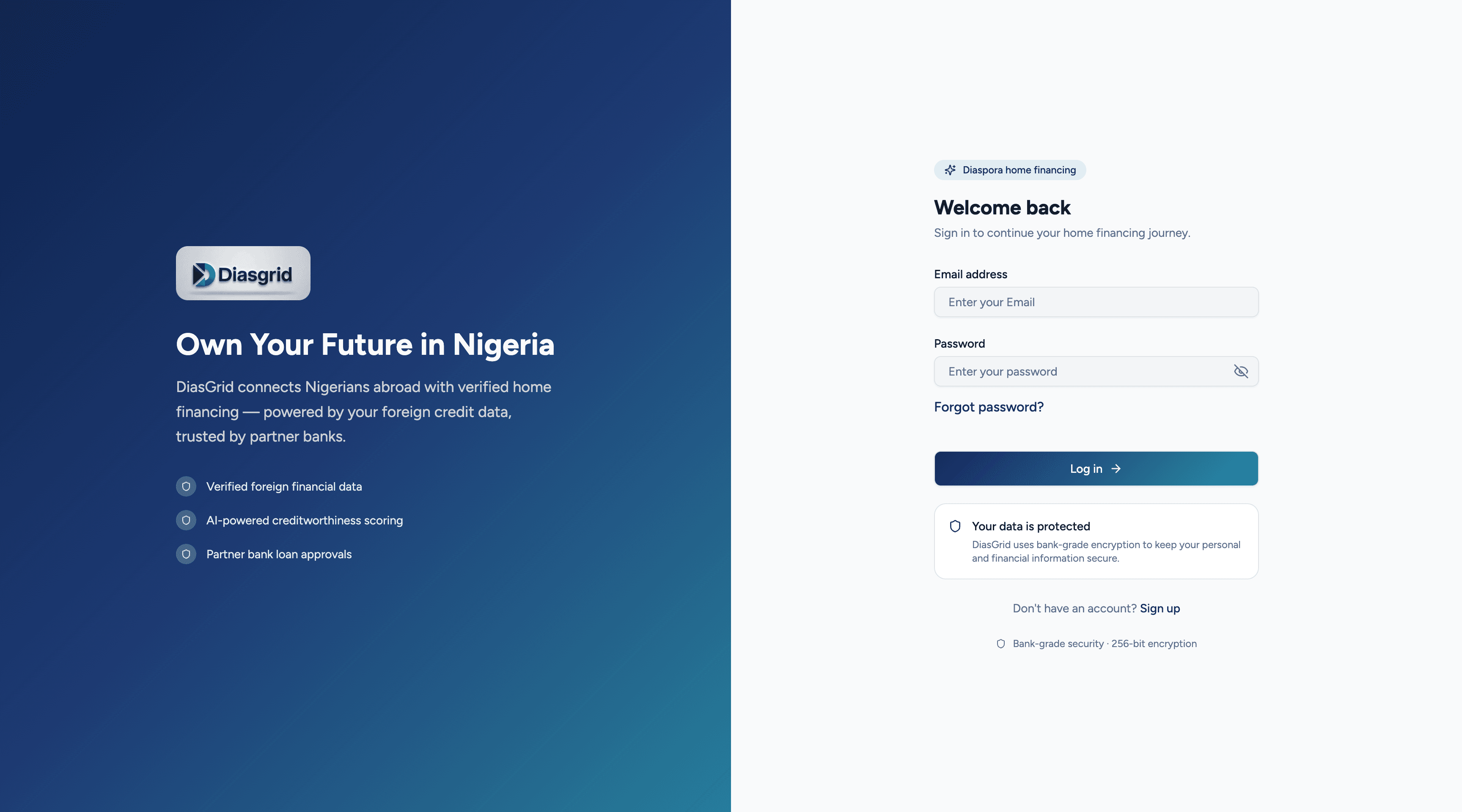
DiasGrid is a financing infrastructure platform that gives Nigerian property developers one operational view of inventory, buyer applications, repayments, and settlements.
// Executive Summary
DiasGrid was built as a financing infrastructure platform connecting Nigerian property developers with diaspora buyers. It gives developers a central operational view of their property business, from inventory and buyer applications to customer activity, repayments, and settlements. Instead of spreadsheets, WhatsApp conversations, and manual payment tracking, developers get a single source of truth for the financing lifecycle.
The Property Financing Bottleneck
Limited Credit Visibility
Developers needed structured information to assess whether a diaspora buyer could sustain a multi-year repayment arrangement.
Poor Inventory Control
Without a central, real-time inventory system, it was difficult to know which units were available, reserved, allocated, or committed, especially with multiple team members managing properties.
Manual Payment Collection
Repayment follow-ups depended on calls, messages, and manual processes, making collections hard to manage consistently when buyers fell behind.
Limited Settlement Visibility
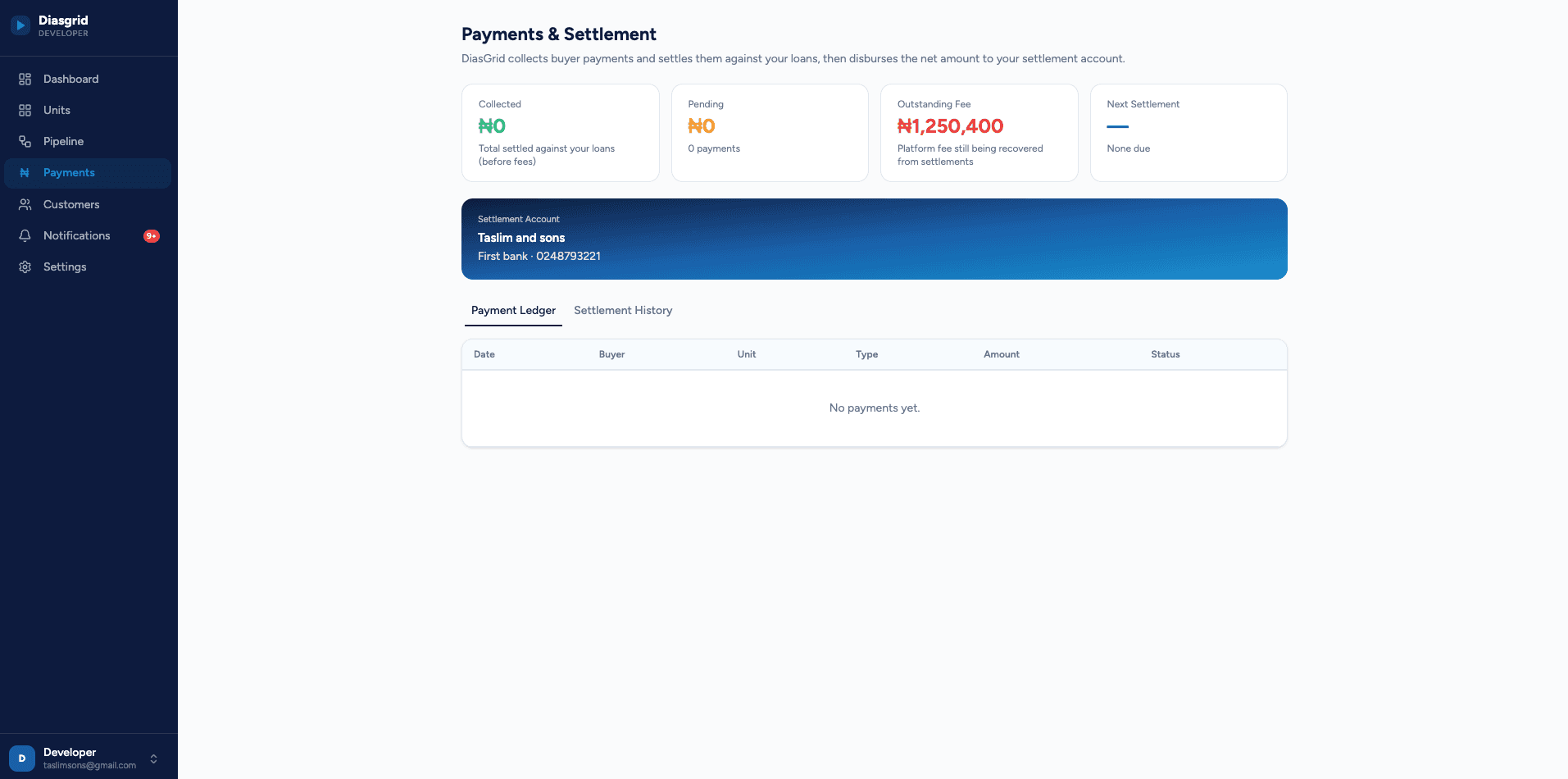
Developers needed a clear picture of how much had been collected, what fees had been deducted, and how much would ultimately be settled to them.
Rather than treating DiasGrid as another property management system, we structured the experience around the developer's actual operational journey. The dashboard became the central layer connecting property inventory, applications, customers, payments, and settlements.
A Single Starting Point
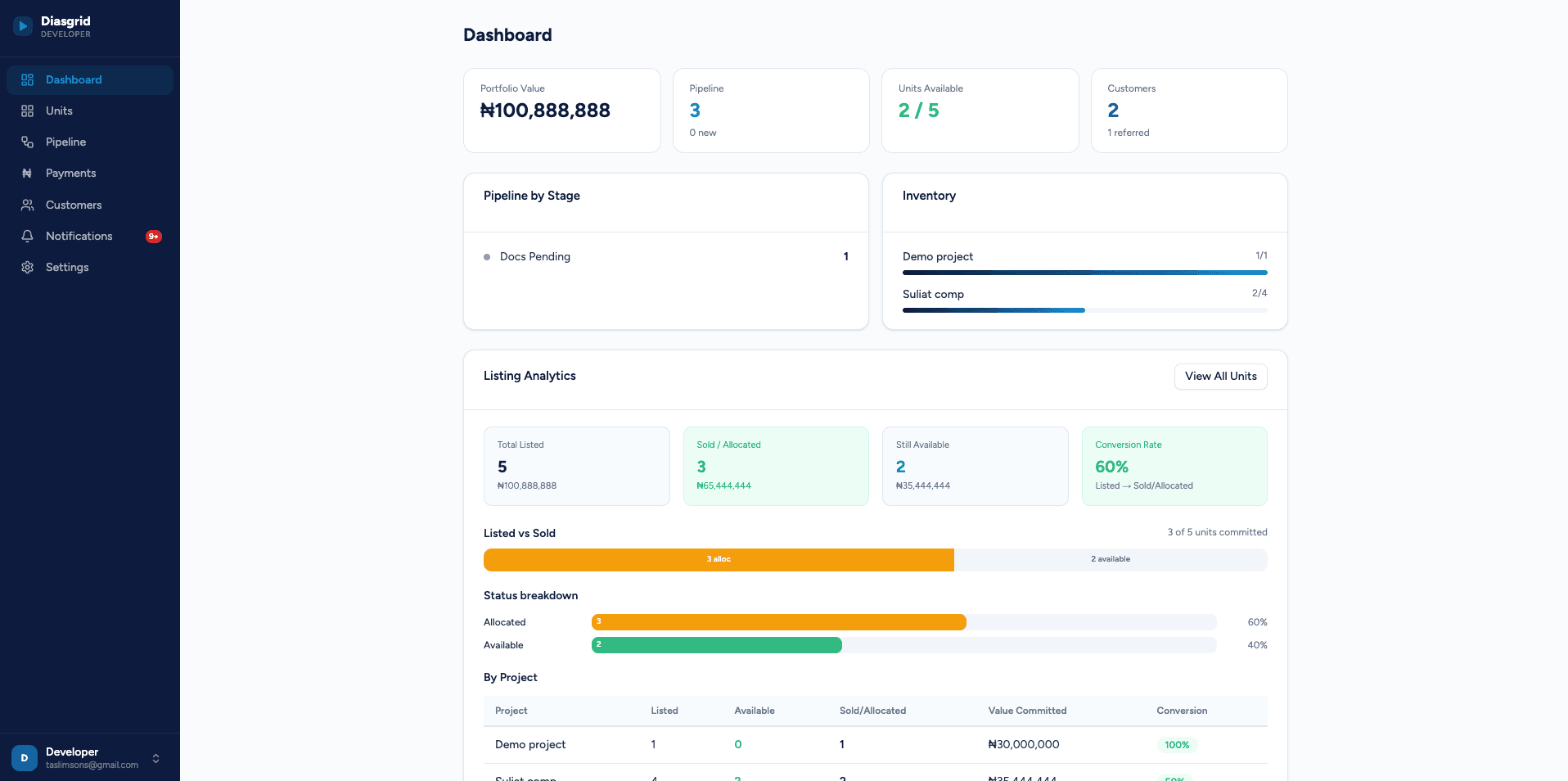
The dashboard brings portfolio value, pipeline activity, available inventory, customer activity, and listing analytics closer together. From there, developers move from an overview into the underlying properties, units, and applications that need attention.
A Defined Unit Lifecycle
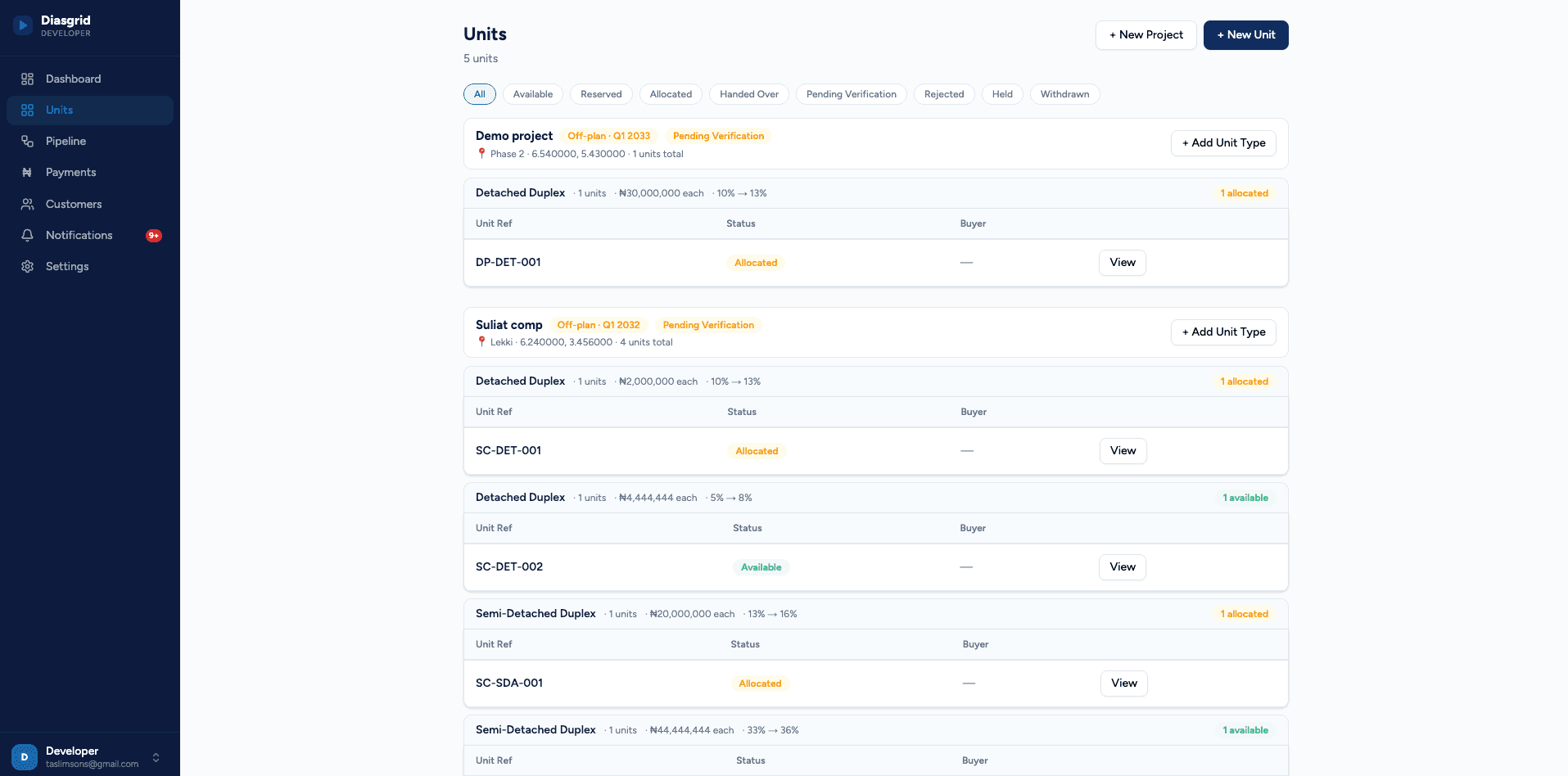
DiasGrid organizes properties around projects and unit types while exposing individual unit references and statuses. Every unit moves through a defined lifecycle, giving developers one structured view instead of separate spreadsheets.
From Isolated Records to a Pipeline
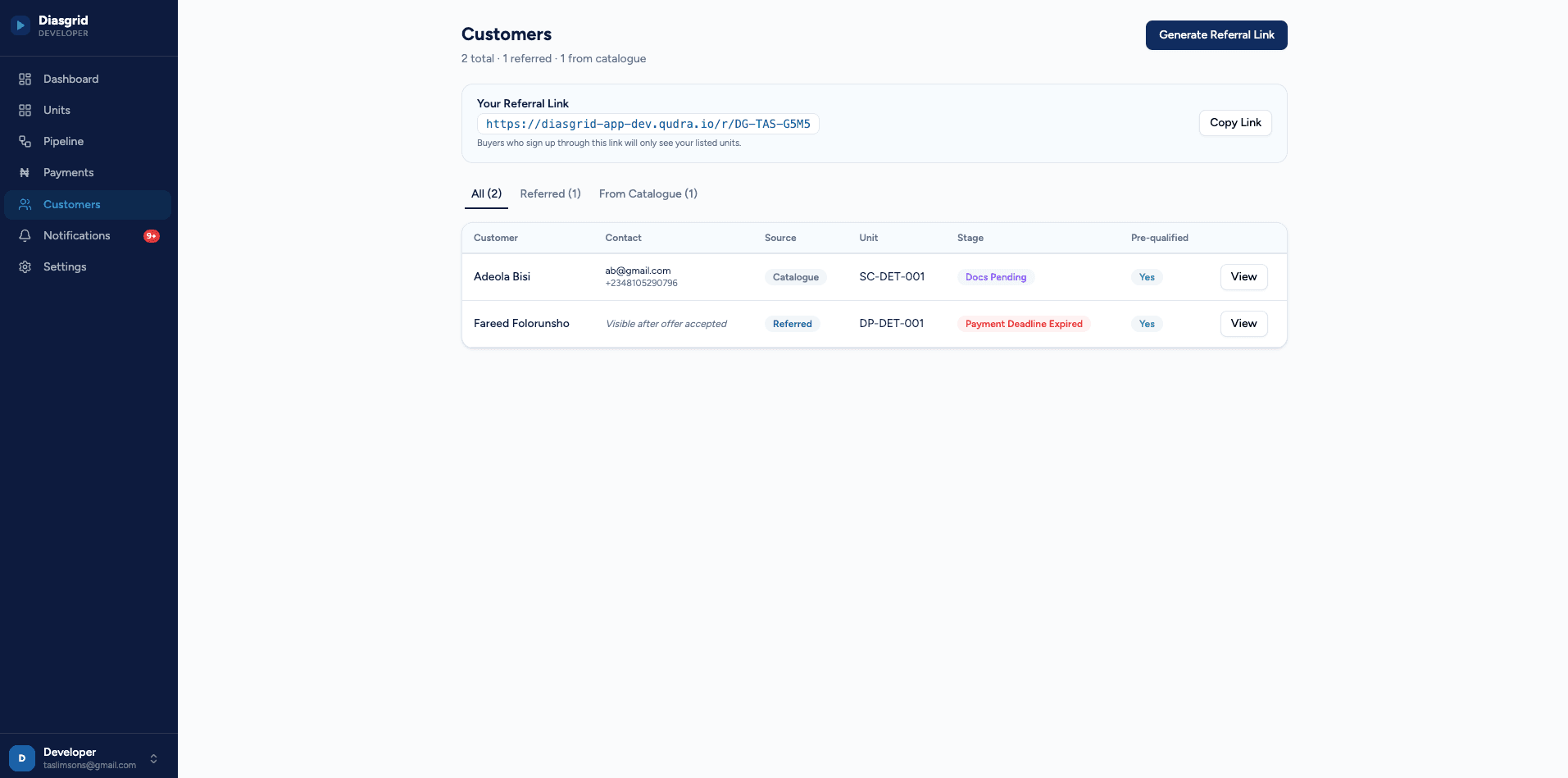
Once a buyer applies, developers can see exactly where the application stands. Applications are structured around their current state, including statuses such as financing activated and offer declined, with room for credit analysis, calculations, and documentation.
Clear Economics for Developers
The product separates the developer's base interest rate from the buyer-facing rate, so the developer's economics and the platform's margin remain distinct. Developers get financing infrastructure without losing control over their existing operations.
On the other side of the platform, diaspora buyers can follow their financing without chasing updates over chat or email. The customer app keeps the important parts of the arrangement in one place.
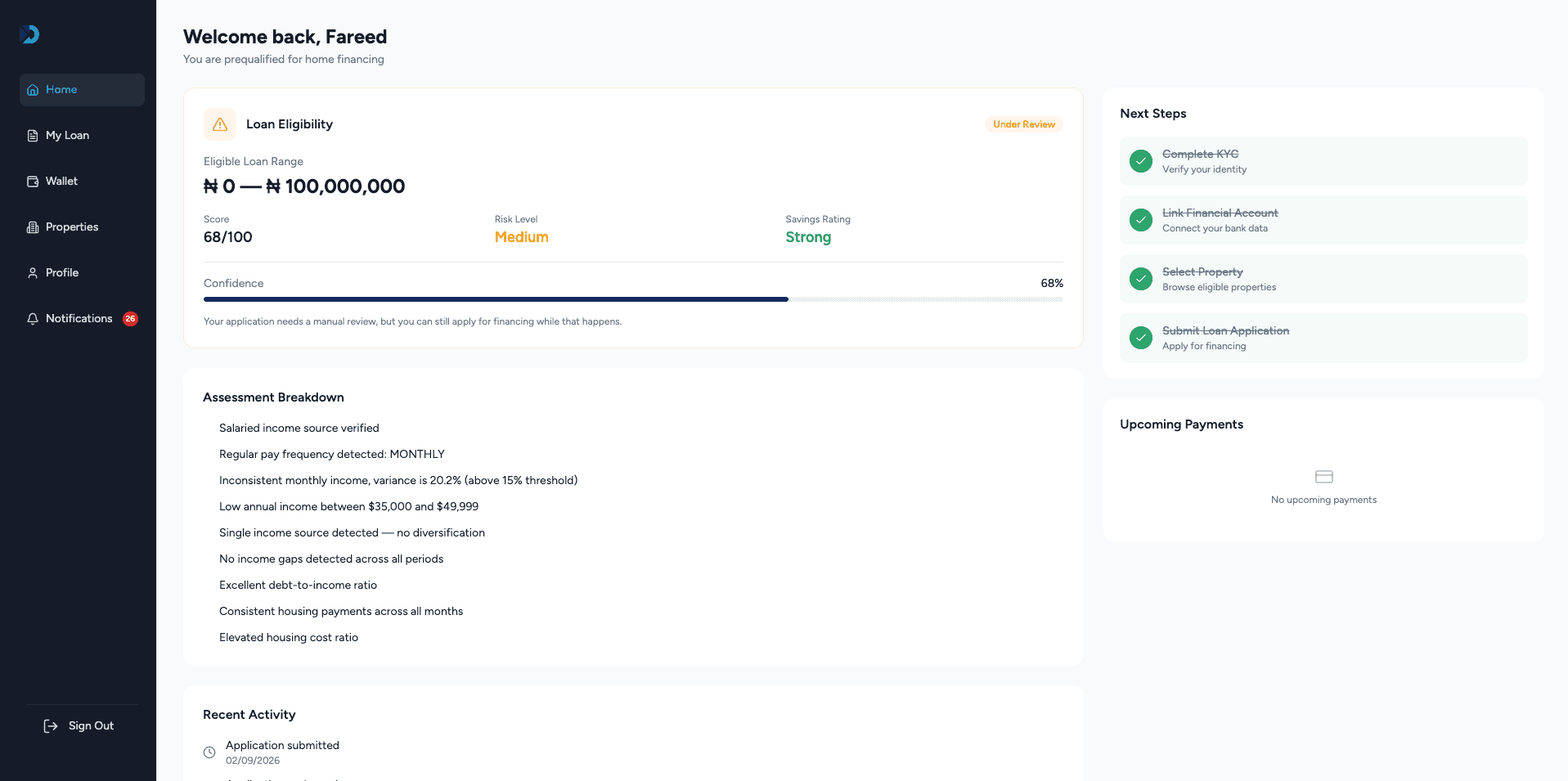
My Dashboard
Buyers get a clear view of their financing, applications, and next steps.
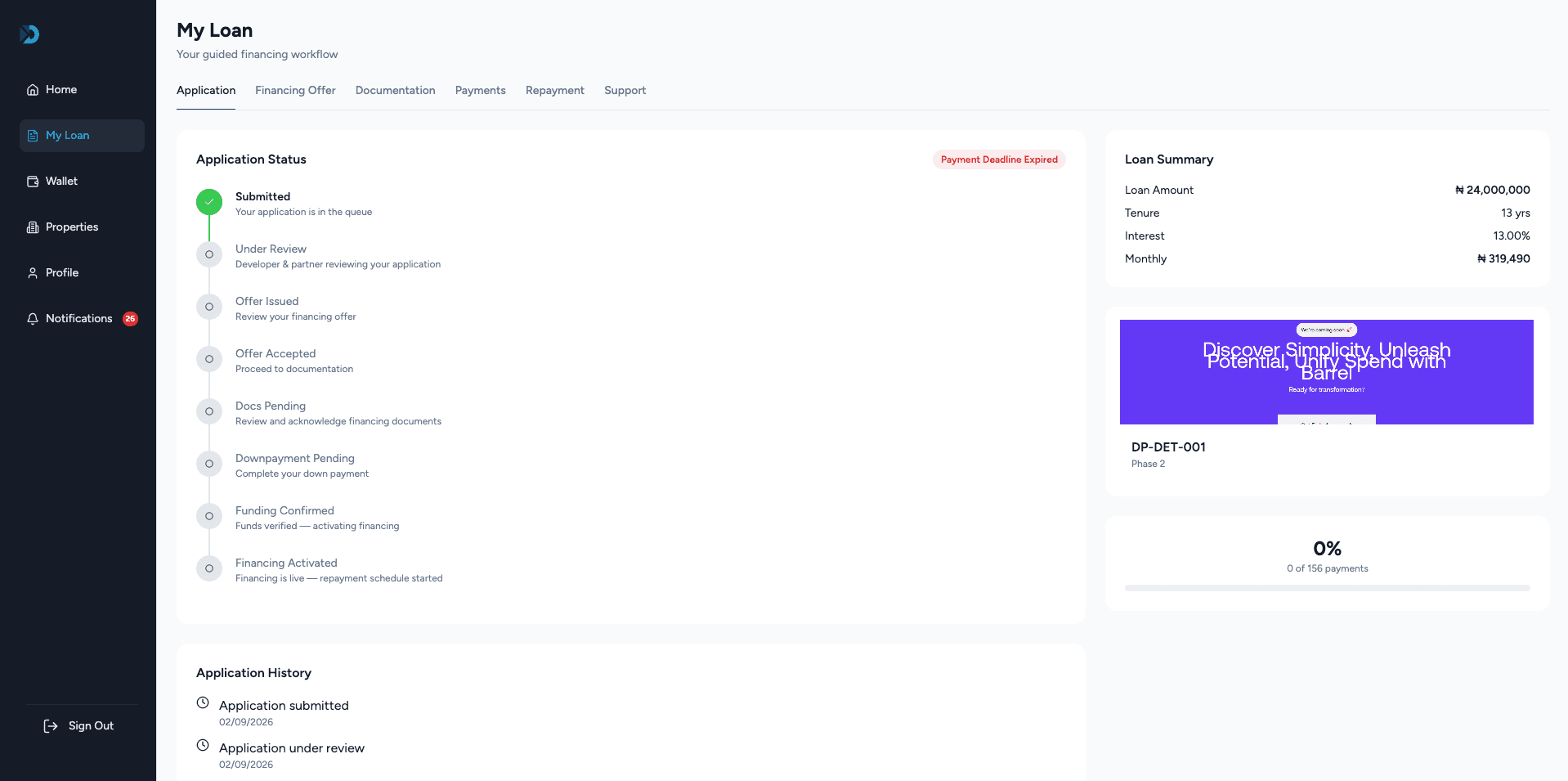
My Loan
Repayment schedules and loan status are available in one place.
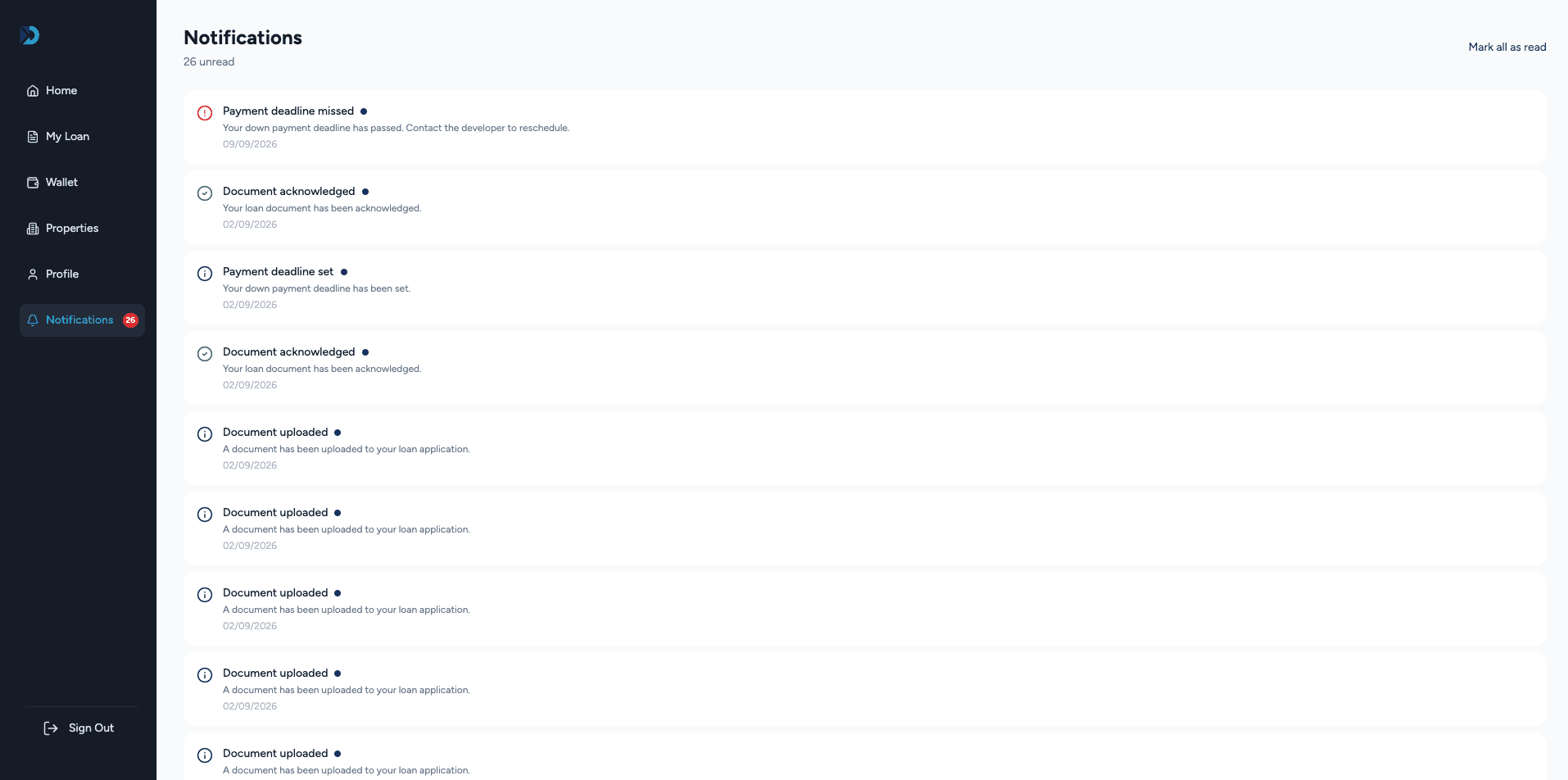
Notifications
Buyers are kept informed about applications, approvals, and repayments.
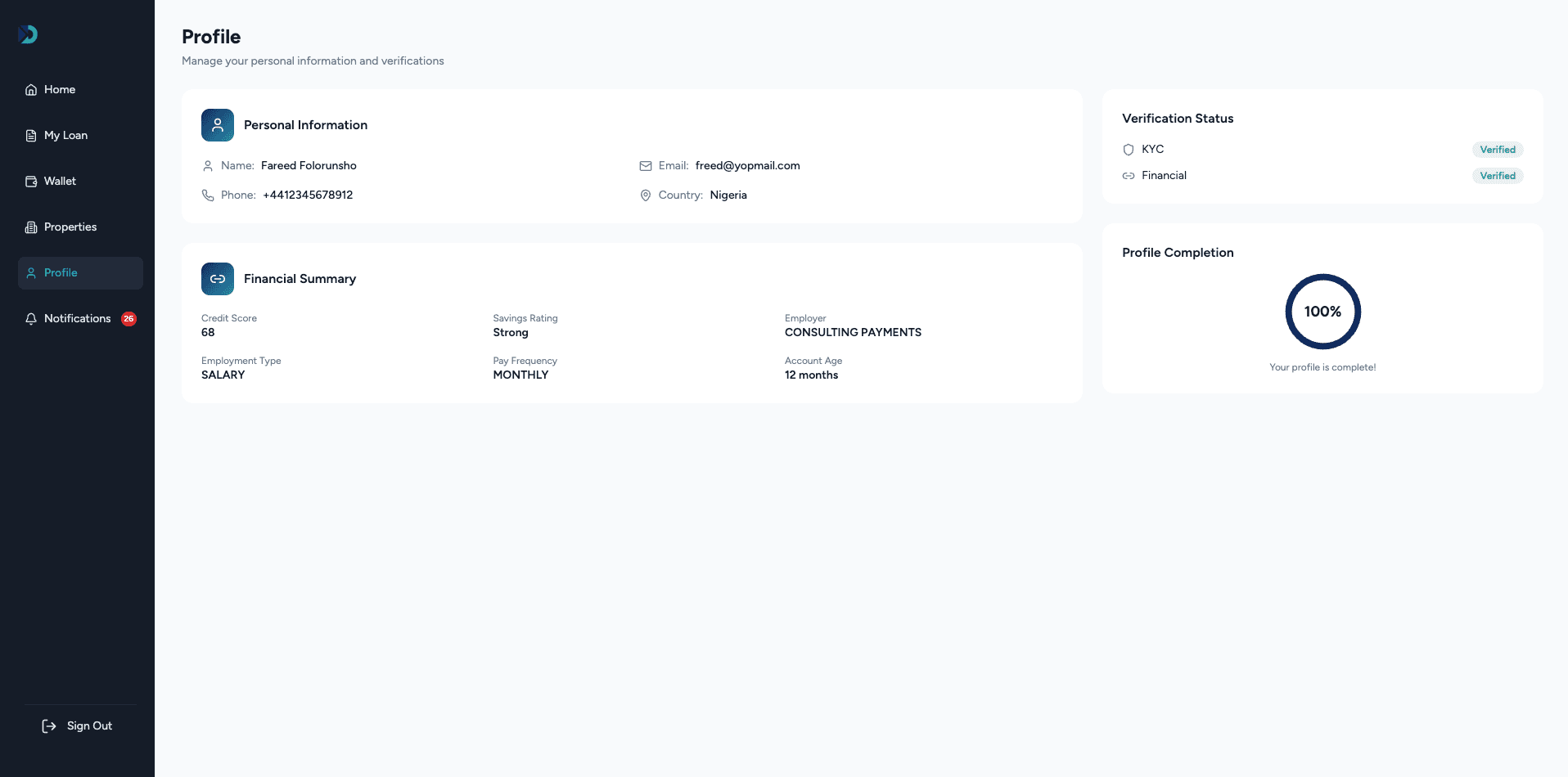
Profile
Personal details and account information stay current and accessible.
From Fragmented Operations to One Source of Truth
The core outcome is that important operational questions can be answered from one place instead of being pieced together across tools.
Which units are available?
Where is this buyer's application?
Who has made their repayments?
How much has been collected?
What fees have been deducted?
How much will I receive?
01. Operational visibility is a product feature
For businesses managing complex financial and property workflows, visibility is not just reporting. It affects how teams make decisions and take action.
02. A dashboard should answer real questions
The dashboard was designed around what developers actually need to know, rather than simply filling a screen with metrics.
03. Inventory needs a defined lifecycle
Property units move through different stages. Defining those states creates a shared understanding between the platform and the developer.
04. Financing needs more than payment tracking
Applications, credit analysis, repayments, inventory, and settlements influence one another, so the product had to connect them.
05. Build around the existing workflow
The goal was not to replace one spreadsheet with another digital interface, but to turn fragmented processes into one connected system.
Less fragmentation, more visibility, and greater control across the property-financing lifecycle.
DiasGrid represents a shift from managing diaspora property financing through disconnected operational tools to managing it through connected digital infrastructure. Developers get a clearer way to manage properties, understand buyer applications, monitor repayments, and maintain visibility into settlements, all from one workspace.

Sulaimon Shotonwa
Qudra built DiasGrid from the ground up, and it became the foundation of our business. The platform powers our entire property-financing lifecycle, from inventory and buyer applications to repayments and settlements. We could not have launched without it.
Founder / CEO

Next Project
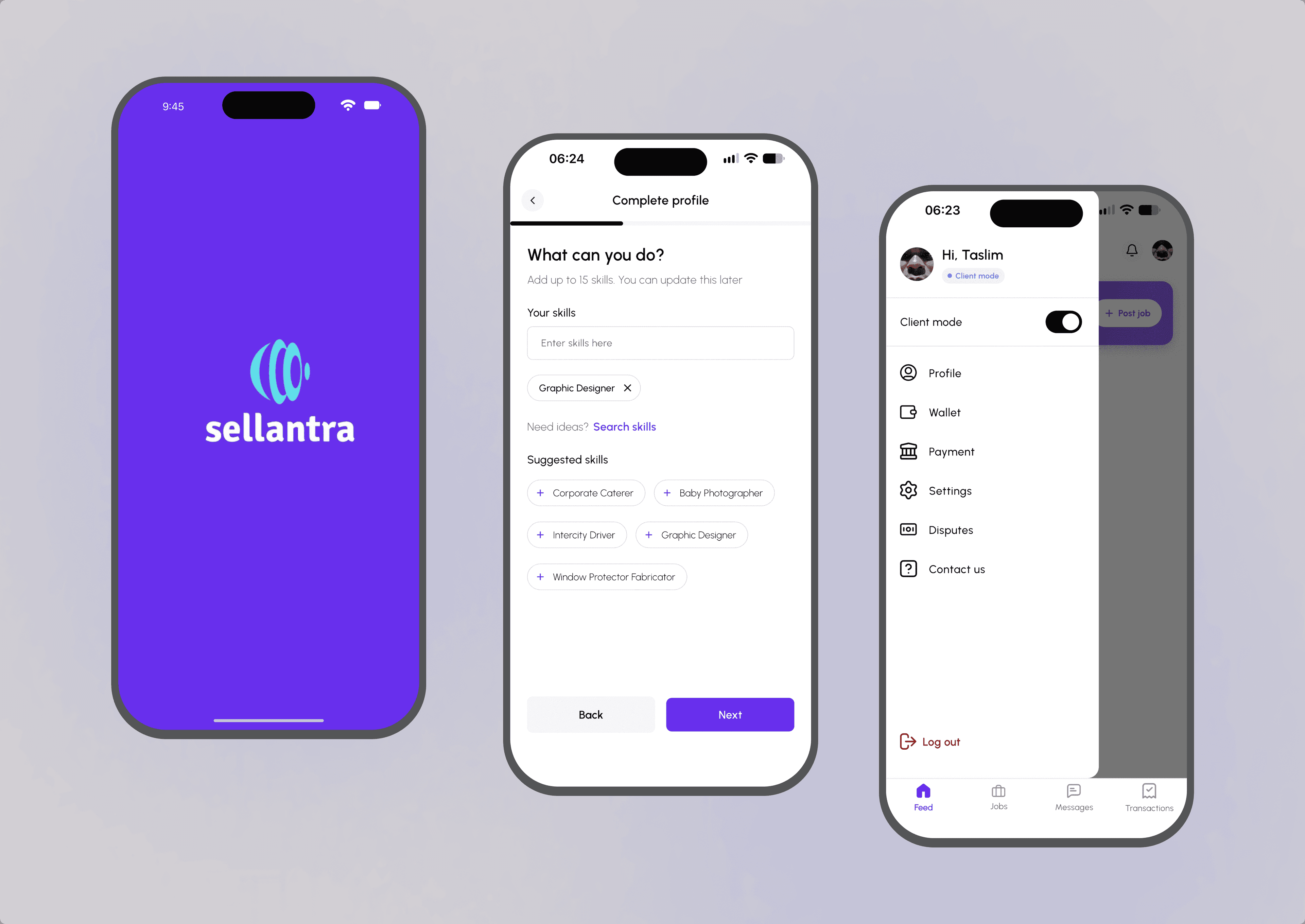
Sellantra
Sellantra is a freelance marketplace where clients only pay when work is approved, and freelancers only start when payment is secured.
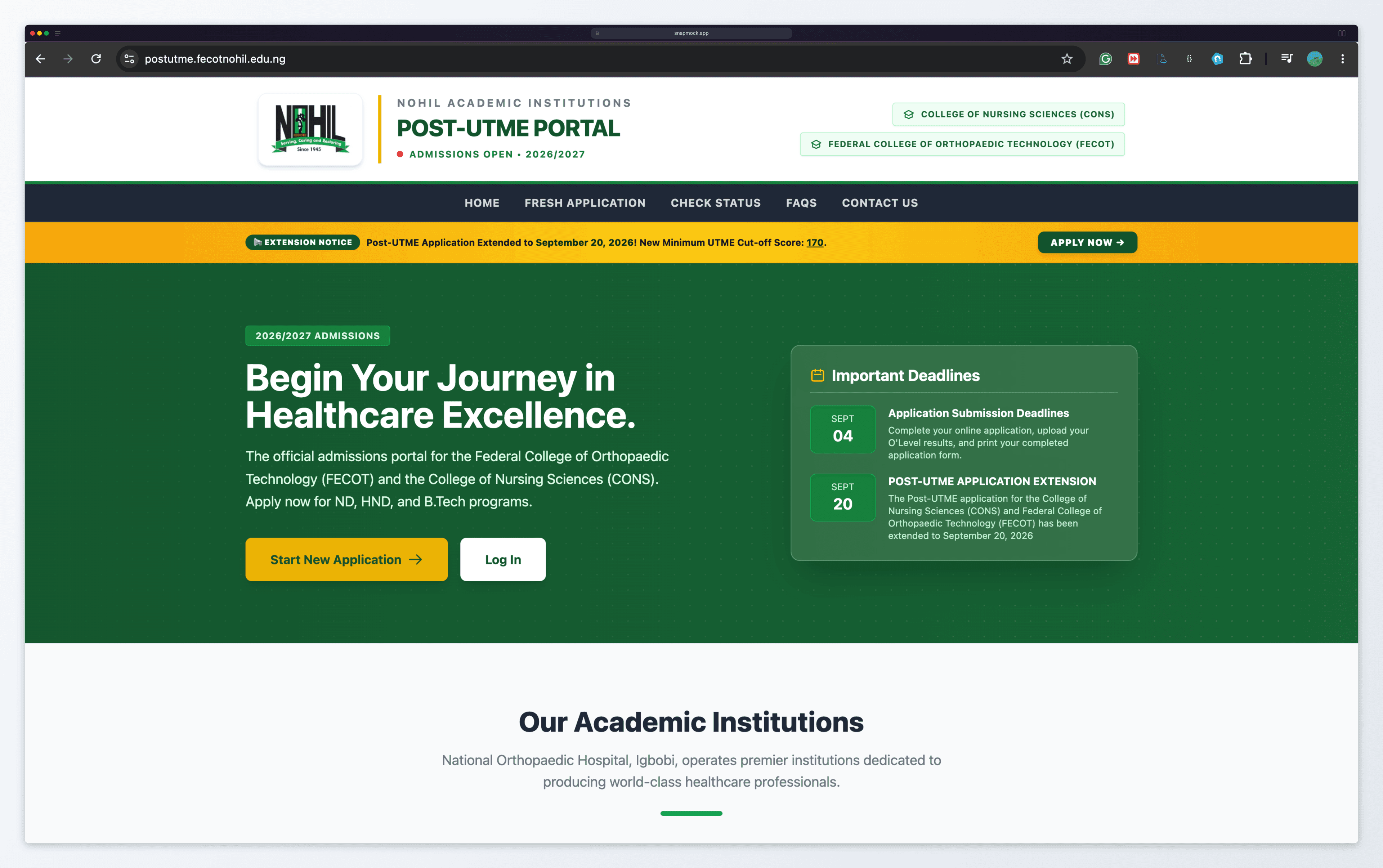
NOHIL Post-UTME Portal
The NOHIL Post-UTME Portal is a central admissions platform for FECOT and CONS at the National Orthopaedic Hospital, Igbobi, covering applications, requirements, deadlines, and screening information.
Ready to build your own success story?
Let’s build your next big idea together.
