
GuideWire: Turning Scattered Company Knowledge into Trusted Answers.
GuideWire is a multi-tenant, AI-powered knowledge and support platform that turns scattered company knowledge into trusted, cited answers.
// Introduction
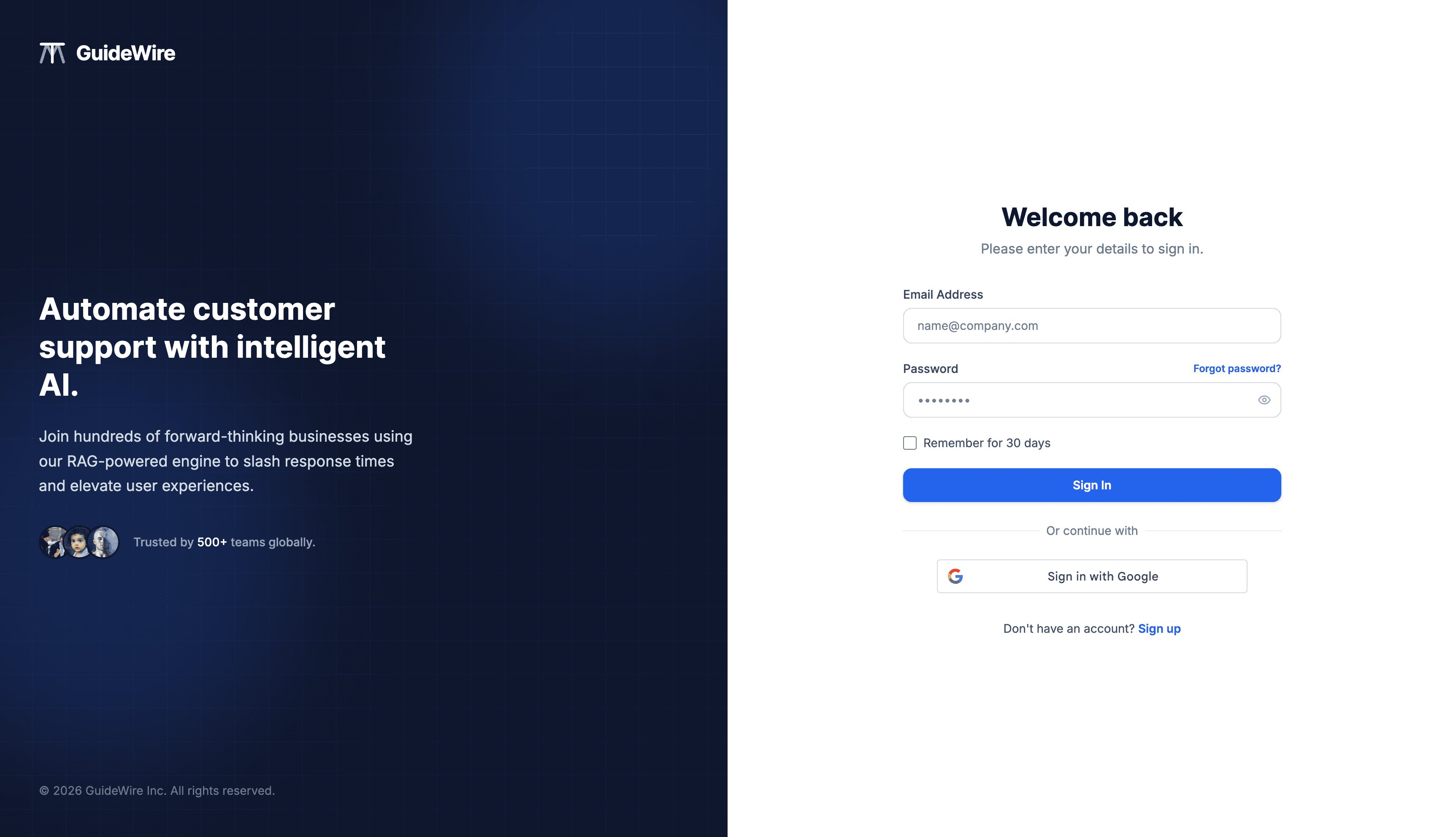
As companies grow, knowledge becomes distributed across documents, FAQs, conversations, product decisions, and internal systems. The problem is no longer simply creating documentation. It is helping people find the right information at the right time, and making sure the answer can be trusted. GuideWire is a multi-tenant, AI-powered knowledge and support platform that lets organizations bring their knowledge into one searchable workspace and ask questions using natural language.
Company Knowledge Was Becoming Difficult to Find
Knowledge is fragmented
Information is stored across files, FAQs, conversations, and other systems, which makes it difficult to establish one reliable place to search.
Finding information takes time
Teams often search through existing documentation before they can answer a question, turning a simple request into a manual research task.
AI answers need to be trustworthy
A conversational system cannot simply generate an answer that sounds correct. Users need to understand where the answer came from.
Sensitive knowledge needs protection
Different employees have access to different information, so the platform must understand what exists and who is allowed to access it.
Give organizations a trusted knowledge layer that can understand their information and make it accessible through natural-language questions.
Workspace Admin
Connects knowledge sources, manages members and permissions, reviews ingestion, and monitors usage.
Employee / Product / Engineering
Asks questions about product behaviour, architecture, decisions, and processes.
Customer Support Agent
Uses approved knowledge to answer customer questions and retrieve relevant source material.
Developer / Integration Owner
Uses GuideWire's APIs and keys to embed knowledge-powered answers into another application.
Platform Operator
Manages tenants, platform health, billing exceptions, and platform-wide metrics.
From Scattered Sources to Searchable Knowledge
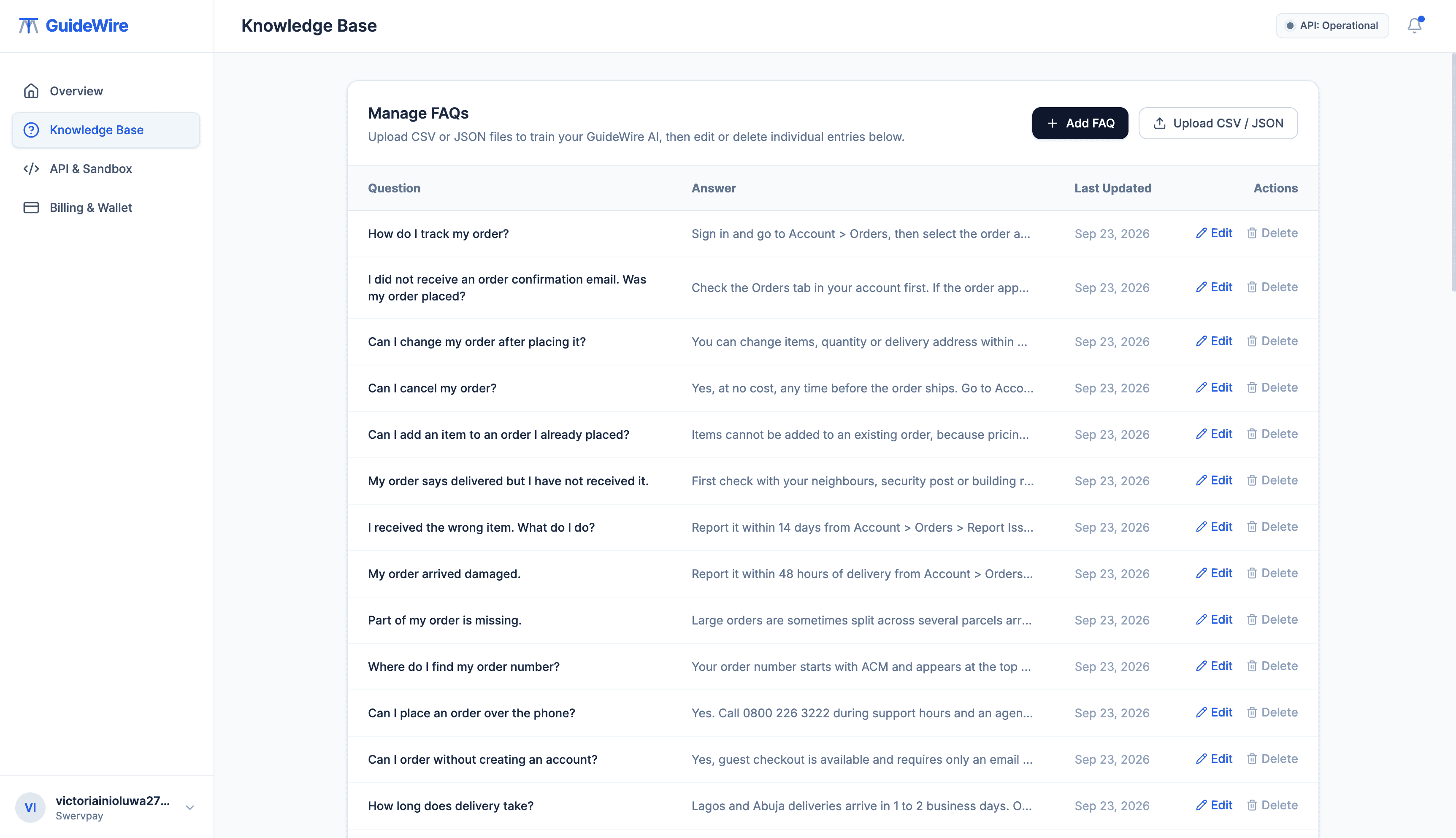
The baseline product supports FAQ knowledge through CSV and JSON uploads. Uploaded content is processed asynchronously, converted into embeddings, and stored in PostgreSQL with pgvector so it can be retrieved later. Administrators can create, edit, re-index, and delete individual entries. The broader direction introduces a common source model for files, Slack content, Coda pages, transcripts, and future connectors.
Answers Grounded in the Organization's Knowledge
When a user asks a question, the system generates a query embedding and retrieves the most relevant knowledge chunks. The baseline retrieval flow uses the top three chunks and passes the context to Gemini for answer generation. If the available knowledge does not contain enough evidence, GuideWire is designed to say so rather than invent an answer.
Not every question has a reliable answer. Instead of hiding that uncertainty, GuideWire makes it part of the experience. Questions that receive a confidence score below 0.60 are logged into an unanswered-query workflow for authorized team members to review.
Retrieval That Respects Access
One of the most important architectural decisions was that retrieval should respect access controls. Tenant, source, channel, document, and user permissions are considered during retrieval, not after the AI has generated an answer. A user should only receive information they are authorized to access. Tenant isolation is enforced across database queries, vector searches, cache keys, background jobs, object storage, and API operations.
The product direction extends beyond uploading FAQs. GuideWire connects to the tools where organizations already communicate and store knowledge, while preserving the original source and permissions.
Slack
Authorized users ask GuideWire questions without leaving their workspace. Administrators select eligible channels and sources, and answers cite sources the requesting user can access.
Coda
Administrators select documents or pages for indexing, perform an initial import, and synchronize changes over time. Deleted or disconnected content is reflected so outdated knowledge does not remain.
Google Drive
Documents can be indexed into the knowledge layer while preserving the original file and its access permissions.
These integrations are part of the expansion roadmap rather than baseline production capabilities.
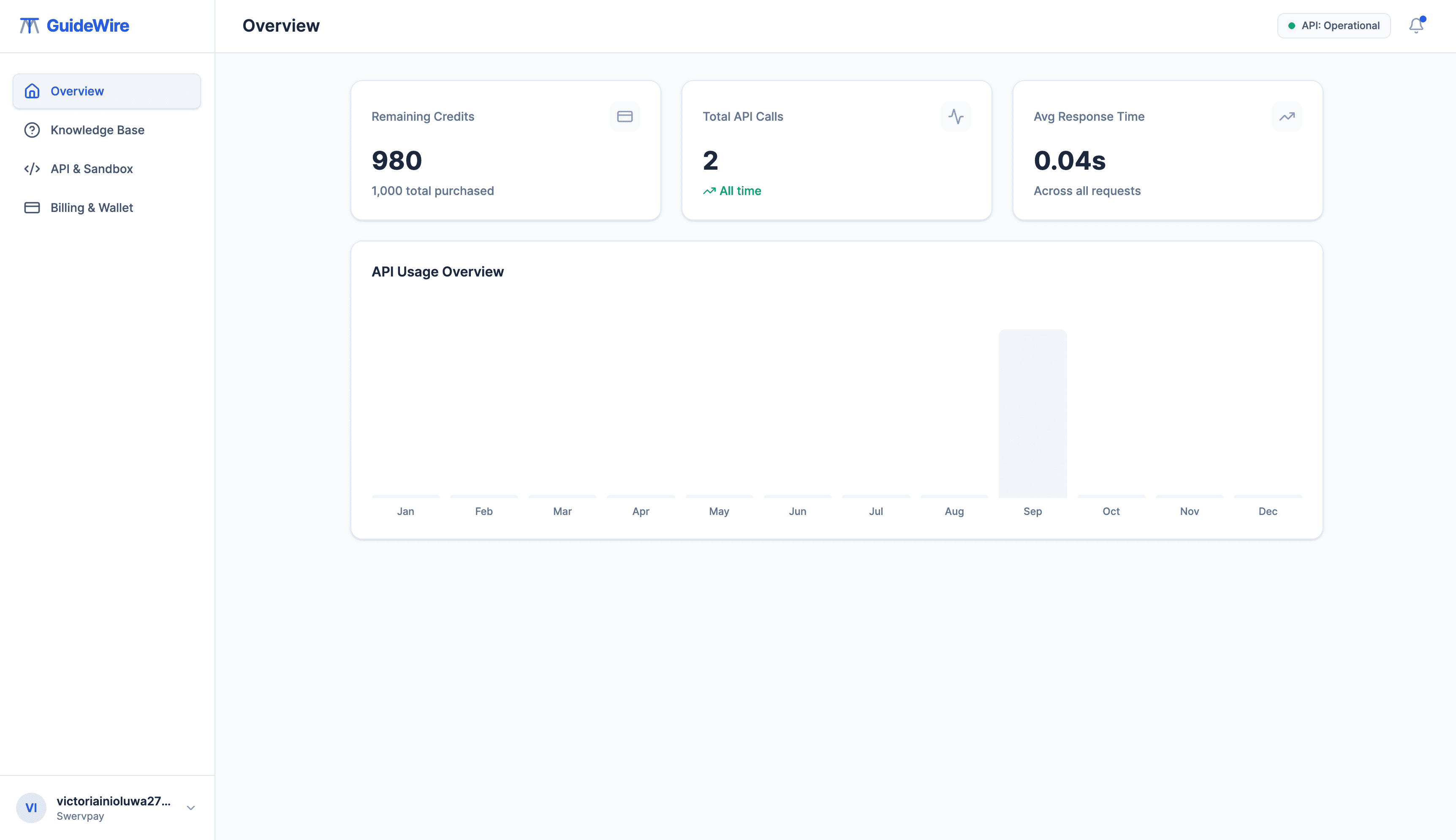
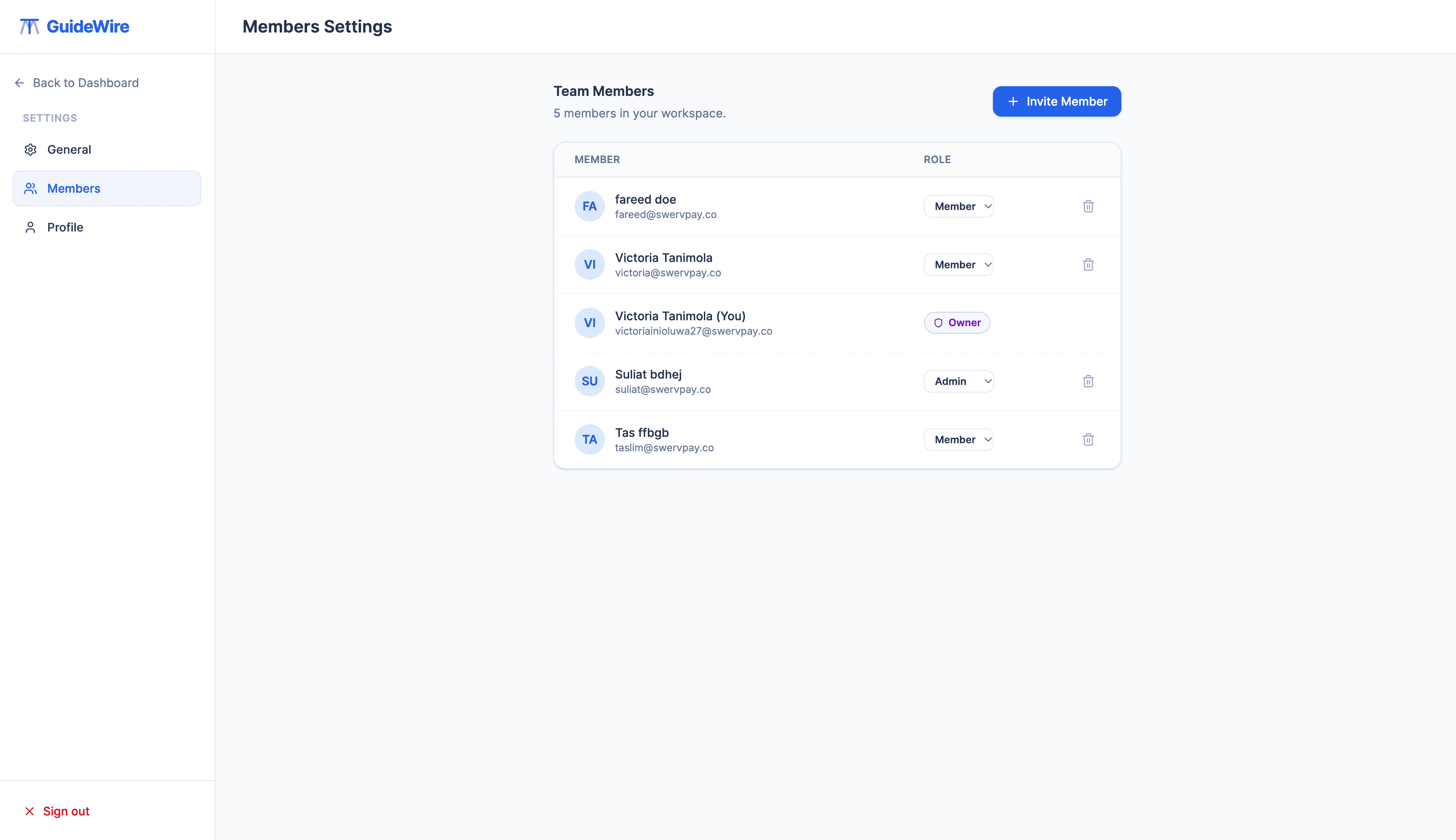
GuideWire includes the infrastructure required to operate as a SaaS platform: organization onboarding, role-based membership, API keys, a developer sandbox, usage logging, a credit wallet, payment processing, and platform administration. Organizations receive baseline welcome credits, while API usage consumes credits under the billing model. The platform supports Paystack and Stripe.
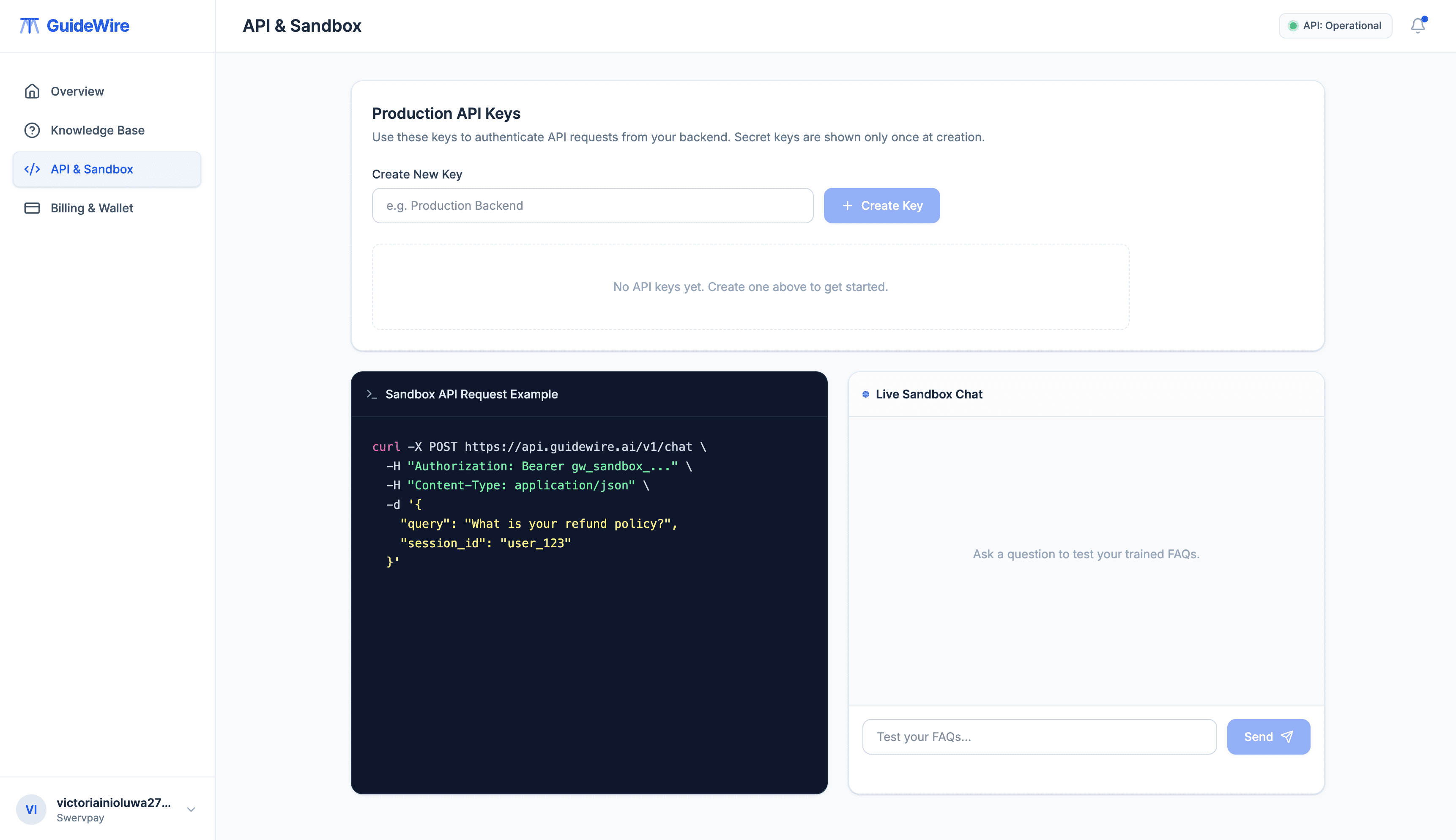
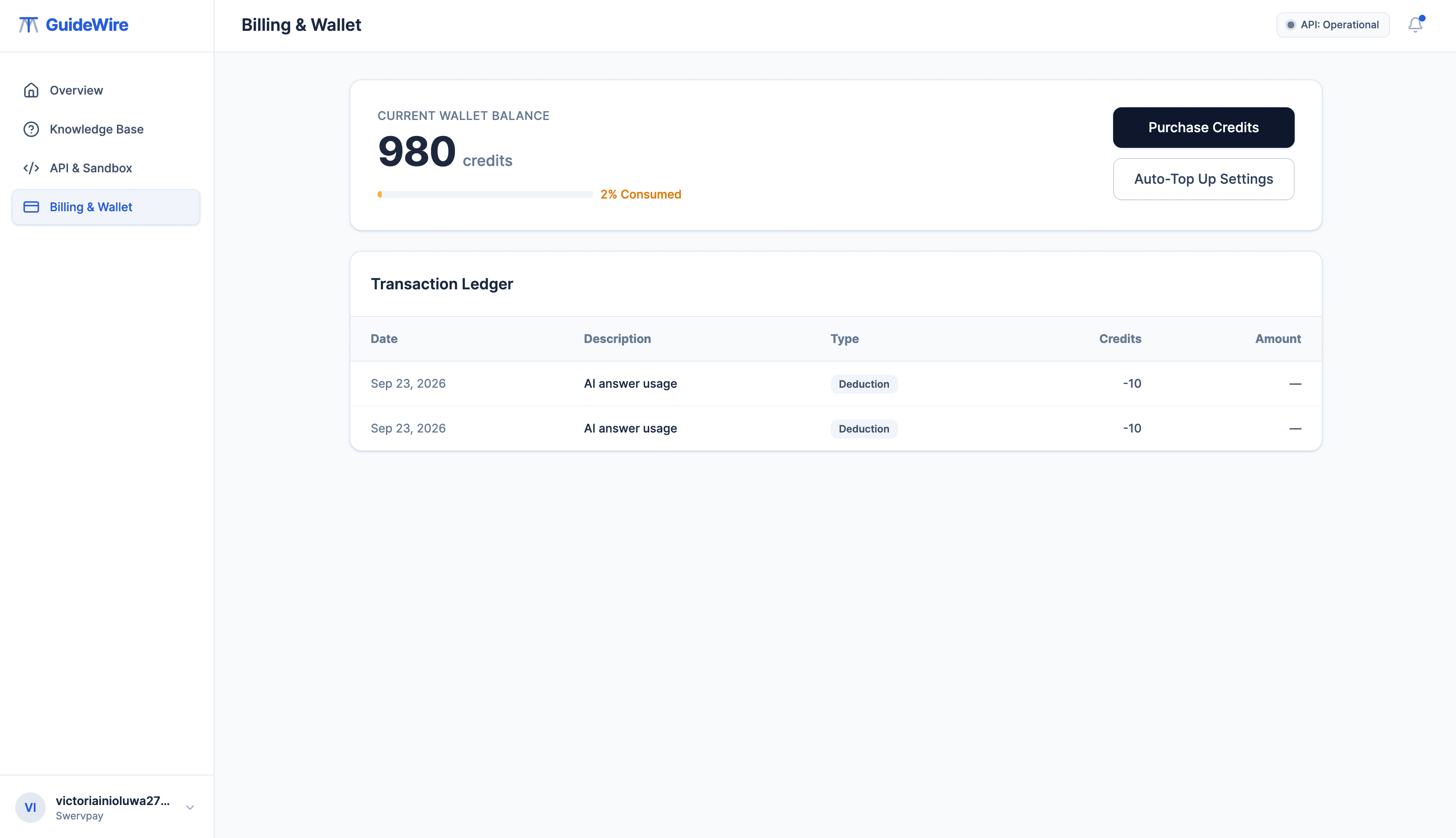
GuideWire's architecture separates the stages of the knowledge lifecycle. The proposed source architecture introduces entities such as a Knowledge Source, Source Item, Knowledge Chunk, and Retrieval, while supporting services such as synchronization jobs and review items manage how knowledge enters and changes. Audit events cover important security and administrative actions. The result is a system that can add knowledge sources and integrations without rebuilding the core retrieval experience.
01. AI products need a strong knowledge foundation
The quality of an AI answer depends heavily on the quality and accessibility of the knowledge behind it.
02. Trust comes from traceability
Showing where an answer came from gives users a way to verify the response instead of asking them to blindly trust the AI.
03. Uncertainty should be part of the experience
A system that can clearly say it does not have enough information is more useful than one that generates an answer regardless of the evidence.
04. Permissions must exist before retrieval
For enterprise knowledge, access control cannot be added after the answer is generated. It has to be part of the retrieval architecture.
05. Integrations should extend the knowledge layer
Slack, Coda, and Google Drive are not intended to replace existing systems. GuideWire connects to them and makes their knowledge more accessible while preserving the source and permissions.
AI should make organizational knowledge easier to access without making it less trustworthy.
GuideWire turns organizational knowledge from something people have to search for into something they can interact with. Instead of asking where the information is, users can ask what the organization knows about a topic. The product connects knowledge ingestion, retrieval, AI-generated answers, citations, confidence signals, access controls, usage management, and future integrations into one platform.
Next Project
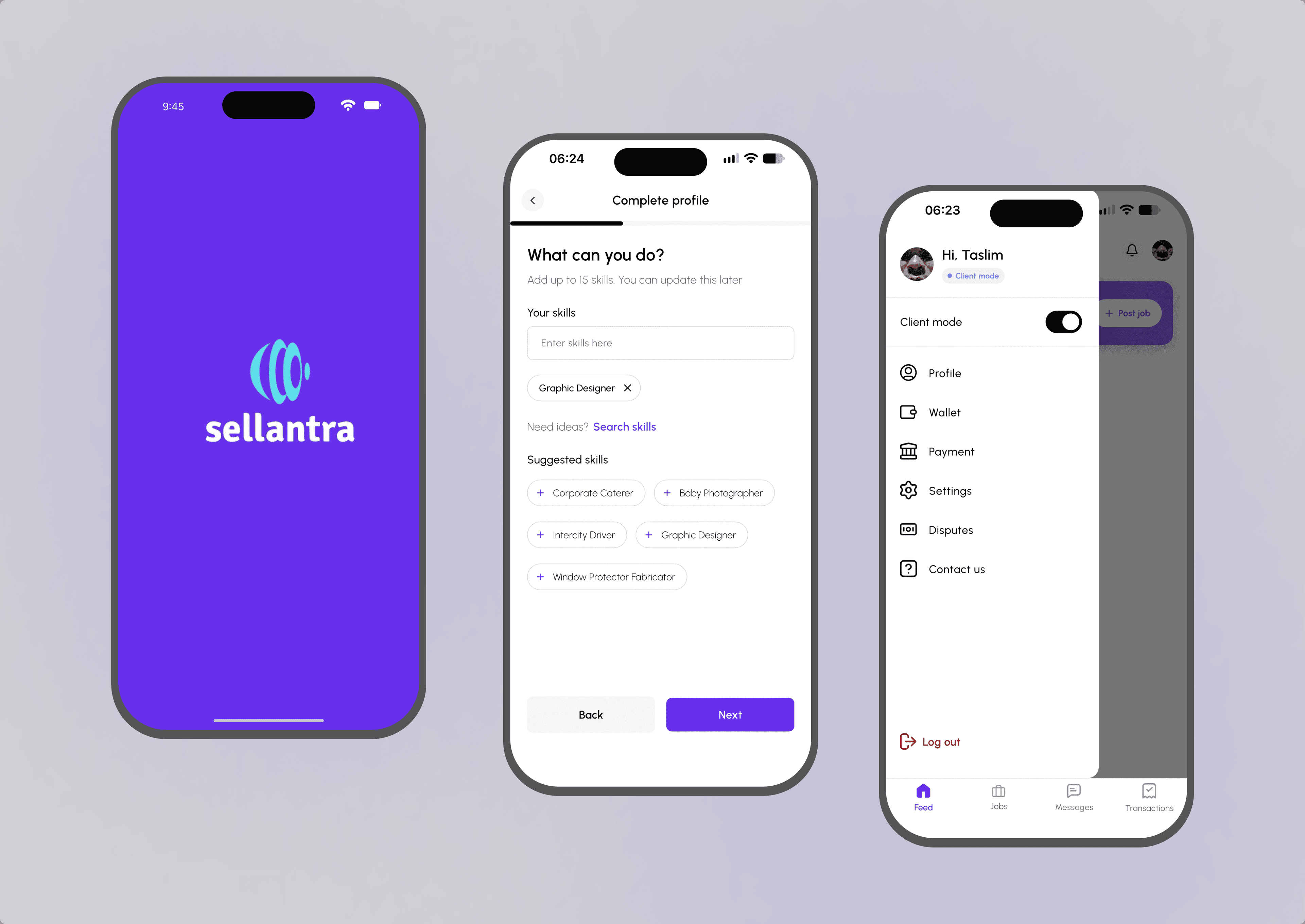
Sellantra
Sellantra is a freelance marketplace where clients only pay when work is approved, and freelancers only start when payment is secured.
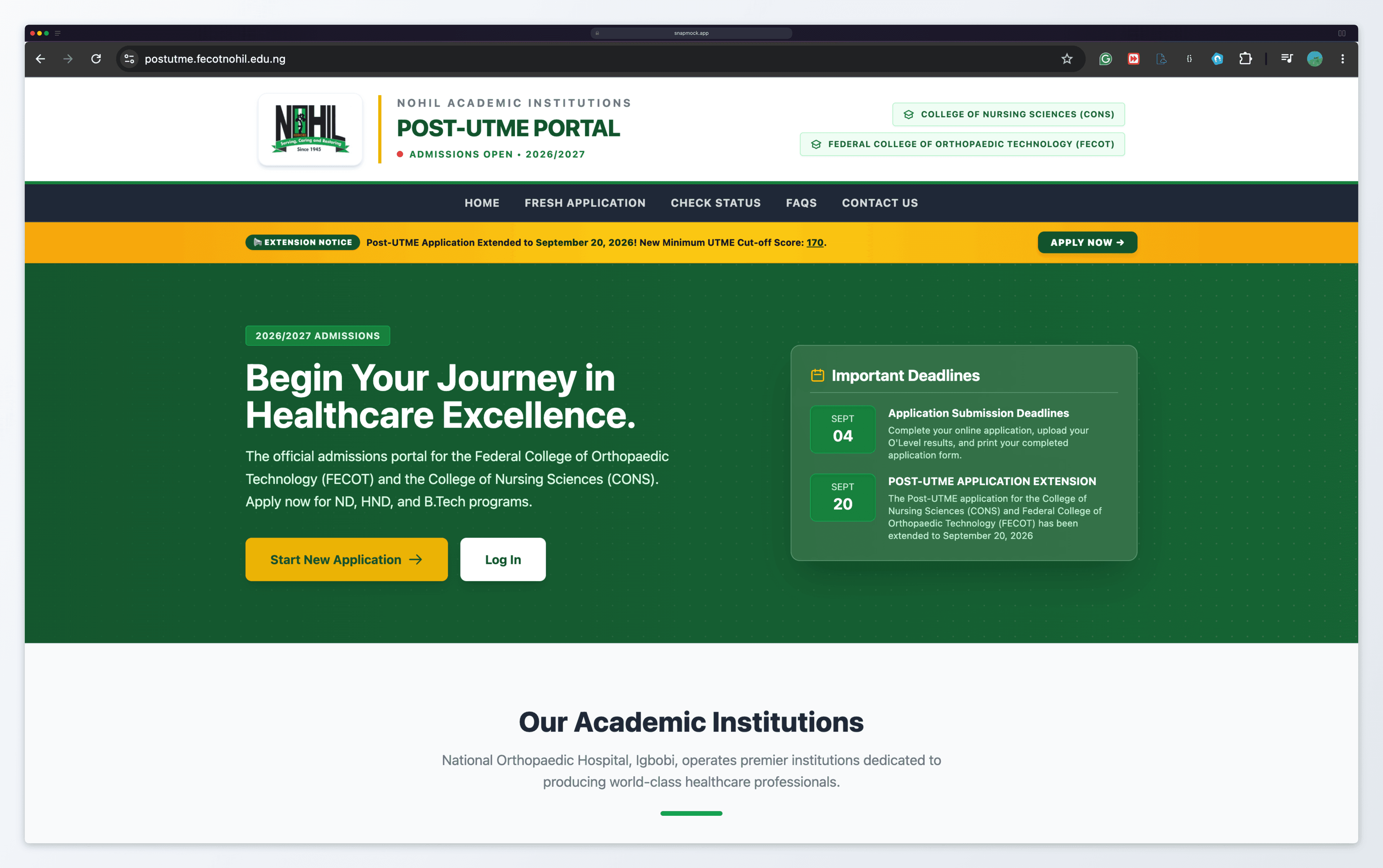
NOHIL Post-UTME Portal
The NOHIL Post-UTME Portal is a central admissions platform for FECOT and CONS at the National Orthopaedic Hospital, Igbobi, covering applications, requirements, deadlines, and screening information.
Ready to build your own success story?
Let’s build your next big idea together.
